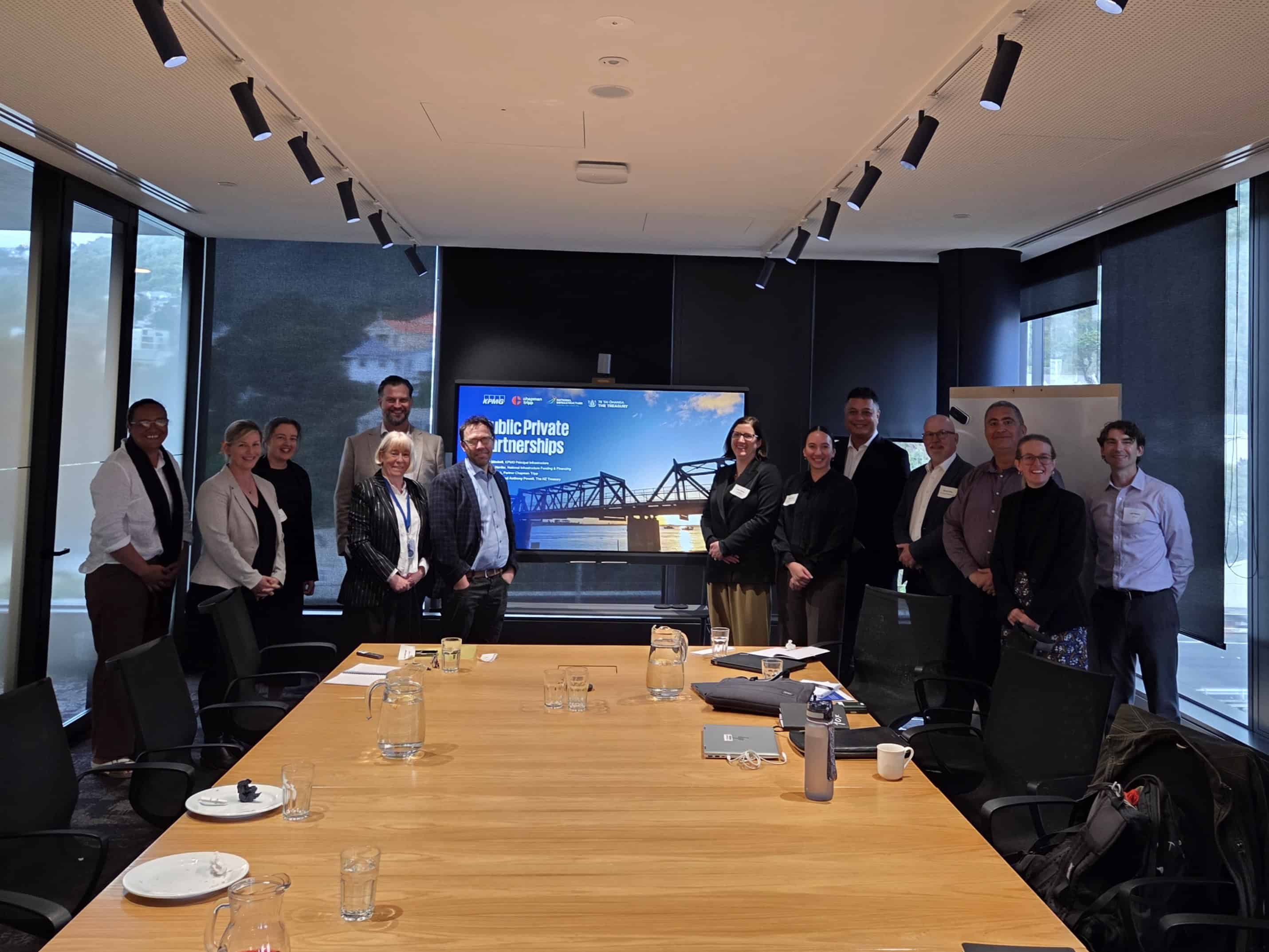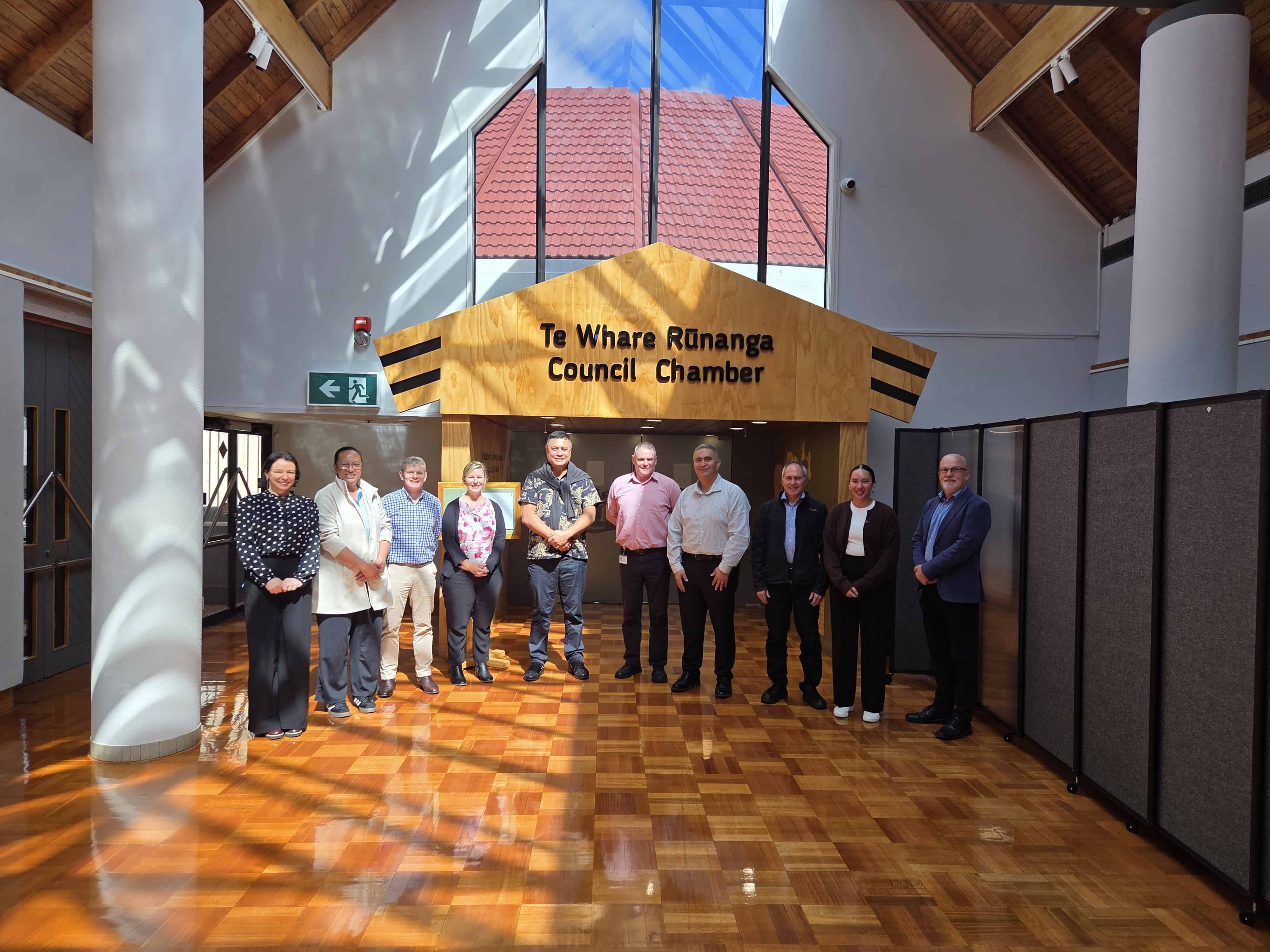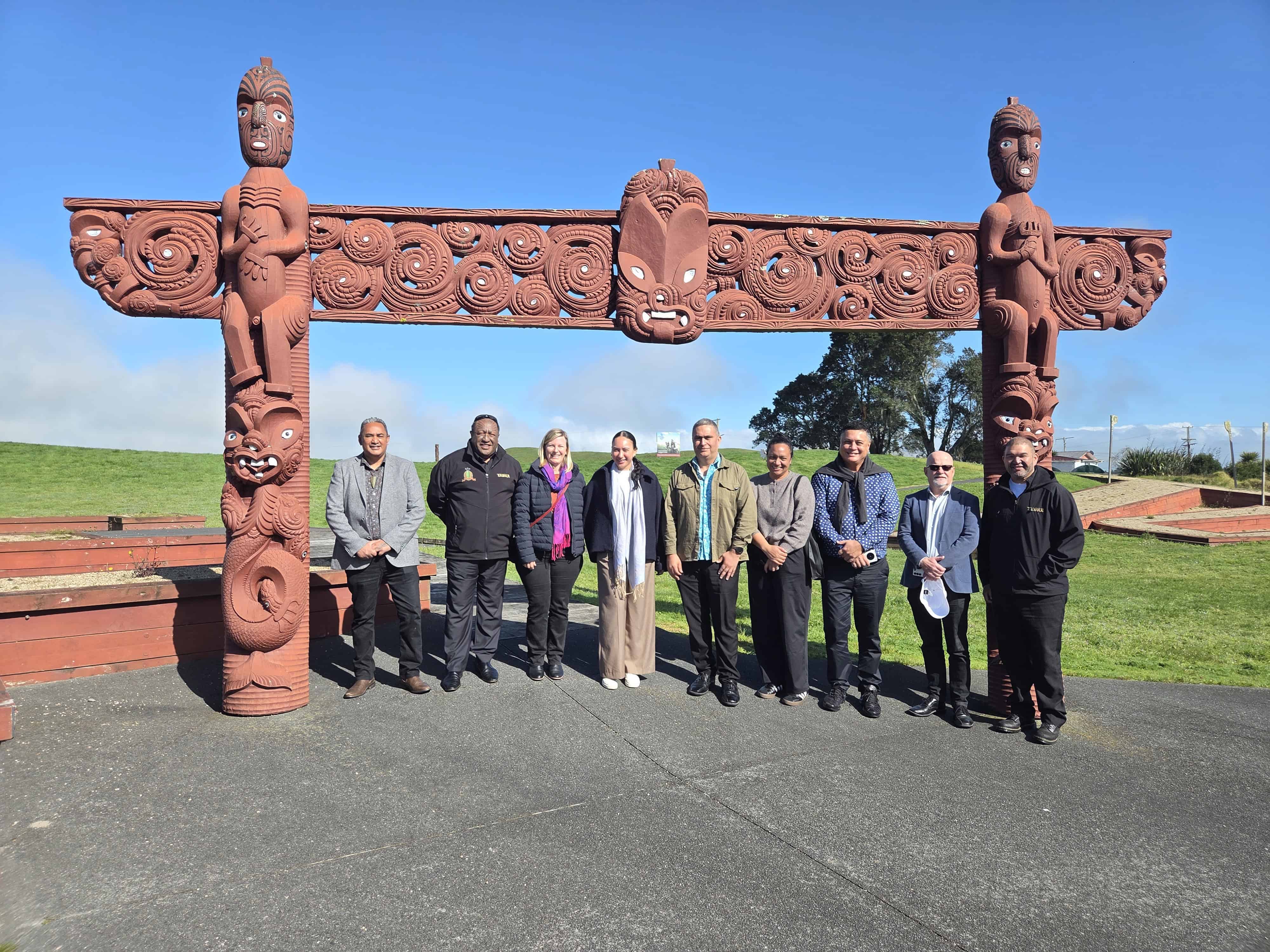

Lessons from a recent New Zealand study tour could help inform future infrastructure investment, planning and delivery in the Cook Islands.
Representatives from the Cook Islands Investment Corporation (CIIC) and the Ministry of Finance and Economic Management (MFEM) have returned from a study tour examining how public-private partnerships (PPPs) and alternative infrastructure delivery models could support better long-term outcomes for the Cook Islands.
The delegation visited Auckland, Hamilton, Rotorua and Wellington, meeting with government agencies, iwi organisations, local authorities and infrastructure specialists to explore approaches to infrastructure planning, procurement, financing, governance and asset management.
Supported by PacificTA, managed by Taituarā and funded through the New Zealand Ministry of Foreign Affairs and Trade (MFAT), the programme provided an opportunity to learn directly from New Zealand’s experience in delivering and managing major infrastructure projects.
A key takeaway from the study tour was that public-private partnerships are not a solution in themselves. While private sector investment, expertise and innovation can contribute to better infrastructure outcomes, successful partnerships depend on strong governance, robust project preparation, sound procurement practices and effective contract management.
CIIC CEO Allan Jensen said the tour provided valuable insights into approaches that could be adapted to the Cook Islands’ particular circumstances.
“Public-private partnerships are one option, but they’re not necessarily the right solution for every project. What’s important is understanding the conditions that need to be in place for any infrastructure investment to deliver lasting value.
“Whether infrastructure is delivered through traditional public funding or alternative models, we need to be capable asset owners, with a clear focus on long-term performance, service delivery and value for money.”
The delegation met with Waikato-Tainui, Rotorua Lakes Council, New Zealand Treasury, the New Zealand Infrastructure Commission (Te Waihanga), Ngāti Toa and specialists in infrastructure financing, insurance, procurement and asset management.
Discussions highlighted the importance of considering the entire life of an infrastructure asset, rather than focusing solely on upfront construction costs. Other key lessons included effective risk allocation, outcomes-based procurement, early engagement with potential delivery partners and the need for a clear, long-term pipeline of infrastructure projects.
Craig Murphy, New Zealand Treasury, said the discussions reinforced the importance of long-term public value in infrastructure investment.
“It was a pleasure to welcome the Cook Islands delegation to New Zealand to discuss infrastructure procurement. The discussion was thoughtful, and everyone involved took away valuable learnings.
There was strong common ground that the success of infrastructure should be measured not by what is built or how it is procured, but by the long-term public value it creates. Sound public finance practice is what makes that possible, and it matters as much for a small island developing state as it does for New Zealand.
We value the relationships built and look forward to continuing the dialogue.”
The visit to Waikato-Tainui also provided insights into how infrastructure investment and commercial activities can support broader social, cultural and economic outcomes, particularly when investment decisions are aligned with the aspirations of communities and future generations.
Waikato-Tainui Chief Executive Donna Flavell said the exchange provided an opportunity for both organisations to share experiences and learn from each other.
“It was a pleasure to welcome the Cook Islands delegation to Waikato and share our experiences in how we approach investment, development and long-term asset stewardship.
“These exchanges are valuable because they create opportunities to learn from one another, build meaningful relationships and explore how our respective experiences can inform future approaches to infrastructure and economic development.”
Ms Flavell said the value of investment extended beyond financial returns.
“For Waikato-Tainui, the importance of investment extends well beyond financial returns. It is about creating enduring value for our people, our communities and future generations.
“We recognise the shared aspirations of iwi and Pacific communities to exercise greater control over their economic futures, and we look forward to continuing these connections and opportunities for collaboration.”
The study tour also established valuable relationships with infrastructure practitioners, policy advisers and commercial specialists, creating opportunities for continued knowledge sharing and collaboration.
Mr Jensen said the Cook Islands would need to determine which of the approaches explored during the tour were appropriate for its own circumstances.
“There’s a great deal we can learn from New Zealand’s experience, but our focus is on identifying what is appropriate and achievable for the Cook Islands.”
“The relationships we’ve established and the knowledge gained will help inform our thinking as we continue strengthening infrastructure planning, investment and asset stewardship.”
CIIC acknowledged PacificTA, Taituarā and MFAT for their support, along with the organisations and individuals who generously shared their expertise with the delegation.